
Videos on Misinformation
This section brings together a curated collection of videos that explore both MAiD-specific claims and misinformation more broadly. You’ll find content that examines how certain narratives about MAiD are constructed and shared, alongside videos that break down the wider patterns behind misinformation—how it spreads, why it can be persuasive, and how it shapes public understanding.
Whether you’re looking to better understand a specific claim or build your overall media literacy, these videos offer additional context and perspective that can complement the written resources throughout the site.
Misinformation and Cognitive Biases Videos
This video by Jonny Harris looks at why we believe lies and misinformation. Common cognitive biases are explored and used as examples of how media can manipulate us into believing just about anything.
With social media, news and information can spread across the world faster than ever... but not all of it is true. And as Artificial Intelligence makes it harder to tell the difference between what’s real and what’s fake, how can we trust what we see and hear?
Social media have accelerated the spread of misinformation. Generative AI is making the problem even more intractable. Now, interdisciplinary researchers are starting to devise solutions.
Disinformation and misinformation can be seen as interchangeable concepts, but what differentiates them is the intent. Find out more about the two concepts in this video explainer.
Host Myles Bess breaks down the research around why our brains can so easily make us believe that fake news is real news.
Technology has brought us to a point where we can no longer believe everything we hear, read or see. In this era of information disorder, Global News explains how we can navigate the pollution of information out there and avoid being duped by 'fake news'.
Social psychologist Heidi Grant Halvorson explains how to make up for lazy shortcuts made by your brain as well as how to guide other people around their first impressions of you.
“Fake news” is simply information that is presented as being true - but is not. France 24 teaches you some tools and techniques that’ll help you stay smart and avoid getting fooled.
Dying With Dignity Explainer Videos
How do you know what’s myth or fact, especially when there are so many headlines about MAID in Canada? DWDC is joined by bioethicist Eric Mathison, who unpacked topics commonly seen in the media and online.
DWDC sat down with palliative care physicians Sandy Buchman and James Downar to explore their research findings on medical assistance in dying, palliative care, and the structural safeguards put in place to protect vulnerable persons in Canada.
Dr. Konia Trouton addresses misleading claims about medical assistance in dying made in a recent video by Kelsi Sheren and Jordan B. Peterson.
DWDC welcomed MAID clinicians Dr. Chantal Perrot and Dr. Eric Thomas to answer questions, including how the process is different for Track 2 applicants and what kinds of conditions might qualify.
General MAiD Misinformation Videos
The BBC explores MAiD for treatment resistant mental illness with John Scully, a man fighting for his right to access MAiD for his severe depression, PTSD, and anxiety from his many years as a war correspondent.
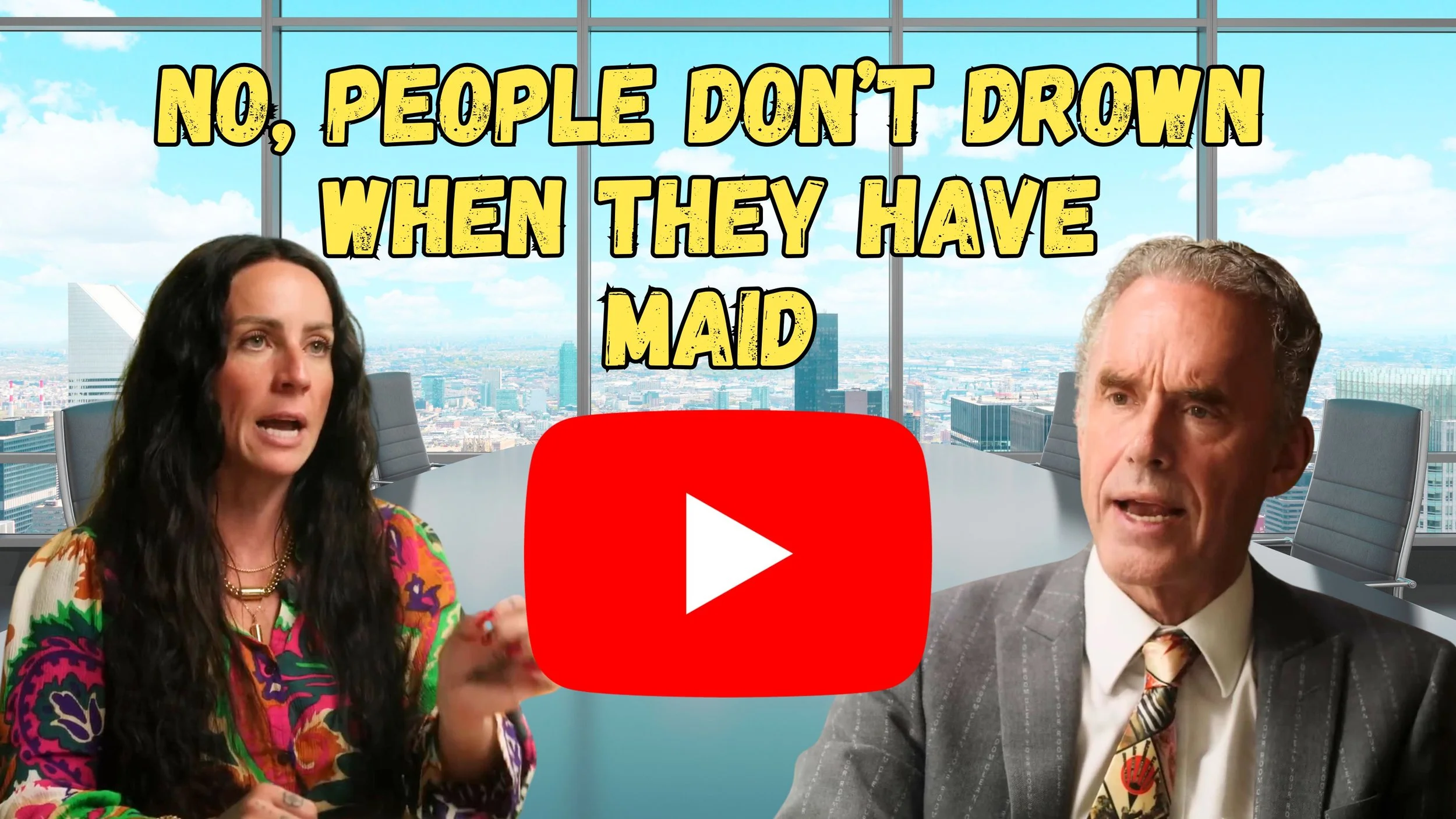
Correcting Kelsi Sheren and Jordan Peterson’s video full of misinformation, disinformation, and outright untruths about Medical Assistance in Dying (MAiD).
In this video, we walk through the eligibility criteria for MAiD in plain, accessible language. We explain what the law requires — and how doctors and nurse practitioners interpret and apply those requirements in real clinical situations.
Dr. Stefanie Green and Dr. John Maher share their opposing perspectives and 6 true facts about Canada’s policy on Medical assistance in dying (MAID).