Articles, Books, and Papers on Misinformation
This section features a selection of books and articles that explore how misinformation spreads, why it can be persuasive, and how it shapes public understanding. While not all focus on MAiD specifically, they provide useful context for recognizing and responding to misleading claims, along with tools to strengthen media literacy and critical thinking.
Scroll left & right to view more.
News Articles
-
![]()
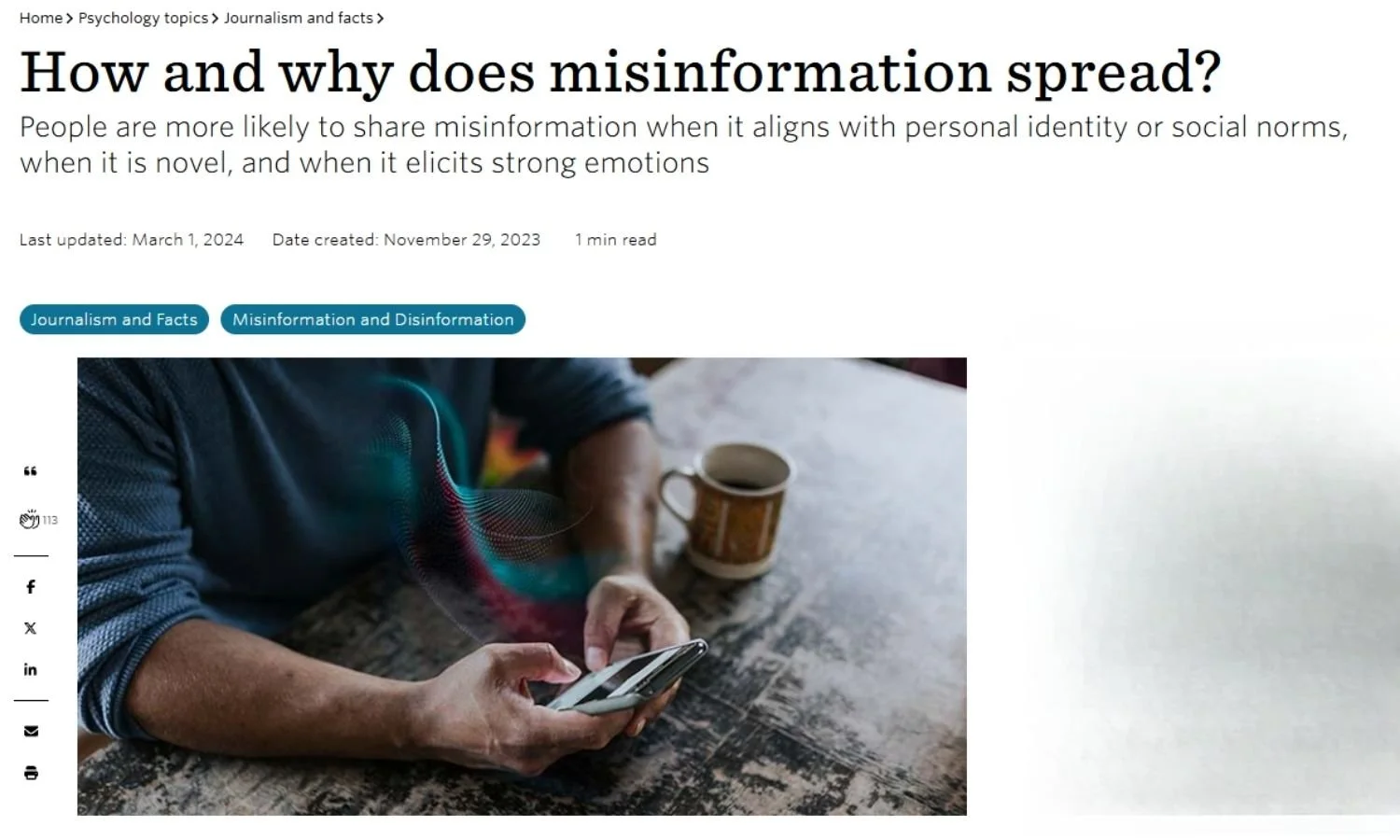
How and why does misinformation spread?
Why does misinformation spread so easily, and why is it so difficult to correct? This accessible overview from the American Psychological Association explains how emotions, identity, cognitive biases, and social media algorithms combine to make false information more likely to be believed and shared—and highlights practical strategies for recognizing and resisting misinformation.
-
![]()
Fact-checking has to go where misinformation actually spreads
How can fact-checking keep up with the speed of misinformation? In this commentary for the International Fact-Checking Network, Laura Zommer argues that accurate reporting alone is no longer enough—fact-checking must be delivered through trusted voices, shareable formats, and the same online spaces where misinformation spreads if it is to have meaningful impact.
-
![]()
How fact-checking is evolving — and having a real impact on the world
Does fact-checking actually make a difference? In this review from the International Fact-Checking Network, Angie Drobnic Holan summarizes the growing evidence that fact-checking reduces belief in false claims, improves public understanding, and helps build long-term resilience against misinformation—while emphasizing that its greatest impact comes when paired with media literacy, trusted messengers, and broad public reach.
-
![]()
Infodemics and misinformation negatively affect people’s health behaviours, new WHO review finds
How does misinformation affect people's health and well-being? In this overview from the World Health Organization, a review of the evidence found that health misinformation can increase fear, confusion, and psychological distress while reducing healthy behaviours, emphasizing that improving digital and health literacy is essential to protecting public health.
-
![]()
Misinformation Red Flags - Warning signs can give you clues about false or misleading content
How can you spot misinformation before sharing it? This practical guide from Poynter's MediaWise highlights common red flags—such as emotionally charged language, missing sources, manipulated images, and claims that can't be verified—and provides simple, evidence-based strategies for evaluating whether online content is trustworthy.
-
![]()
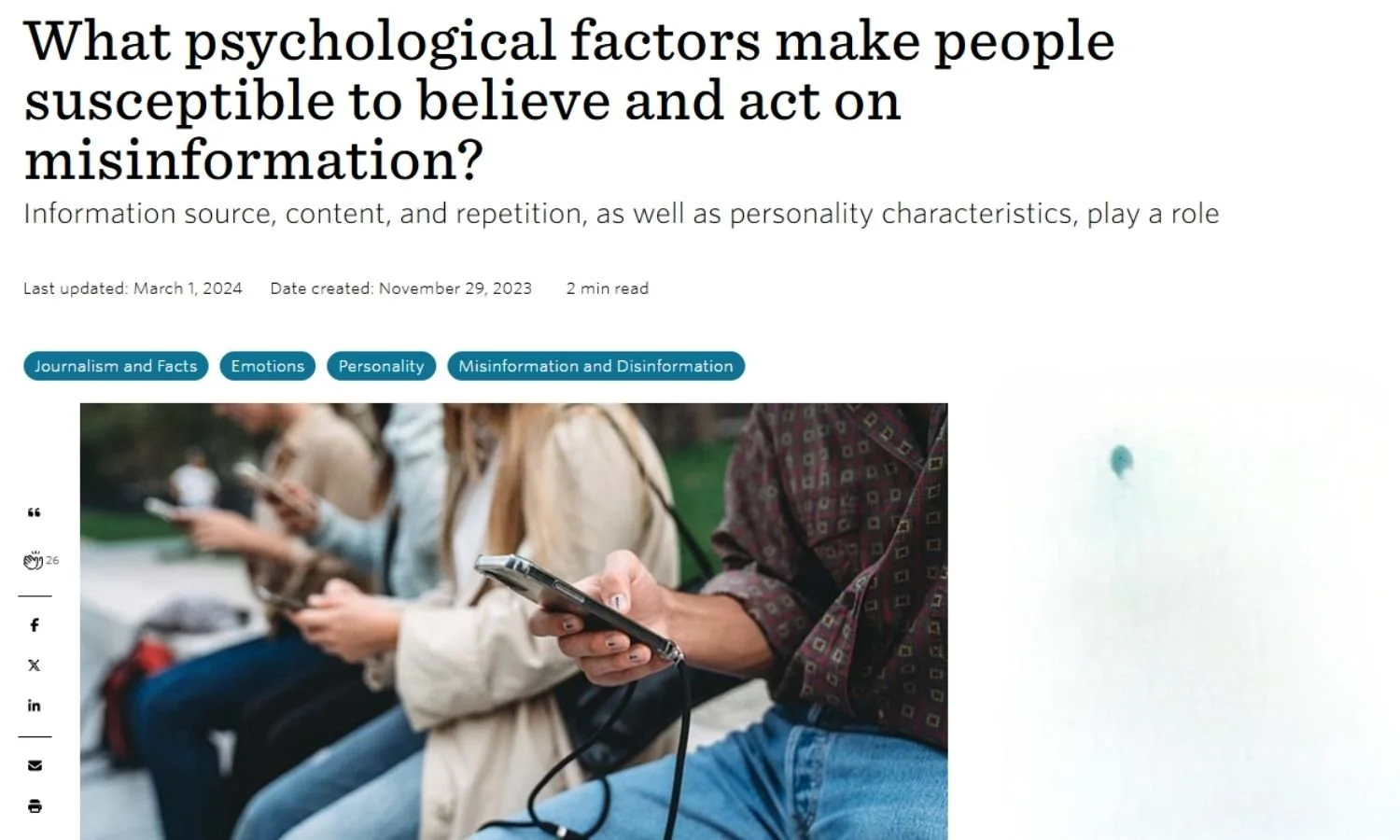
What psychological factors make people susceptible to believe and act on misinformation?
Why do people believe misinformation—and what makes them act on it? This overview from the American Psychological Association explains how misinformation influences not only what people believe but also the decisions they make, highlighting how emotions, social identity, and repeated exposure can shape real-world behaviours while outlining evidence-based strategies to reduce its impact.
-
![]()
Study: On Twitter, false news travels faster than true stories
Why did one study on fake news change how researchers think about misinformation? In this MIT News summary of a landmark Science study, the researchers explain how they found that false news spreads farther, faster, and more broadly than the truth on social media—not because of bots, but because people are more likely to share information that is novel, surprising, and emotionally engaging.
-
![]()
How misinformation spreads on social media—And what to do about it
Why does misinformation spread so rapidly on social media, and what can be done about it? In this Brookings Institution analysis, the authors explain how algorithms, social networks, and human behaviour amplify false information, and outline practical solutions—from improving platform design and transparency to strengthening media literacy and promoting trusted, evidence-based information.
-
![]()
Want to fight misinformation? Teach people how algorithms work.
What if one of the best ways to fight misinformation is to understand how social media algorithms work? This Nieman Journalism Lab article highlights research showing that people who understand how algorithms filter and amplify content are better able to recognize misinformation and take action against it, making algorithm literacy a powerful tool for navigating today's information environment.
-
![]()
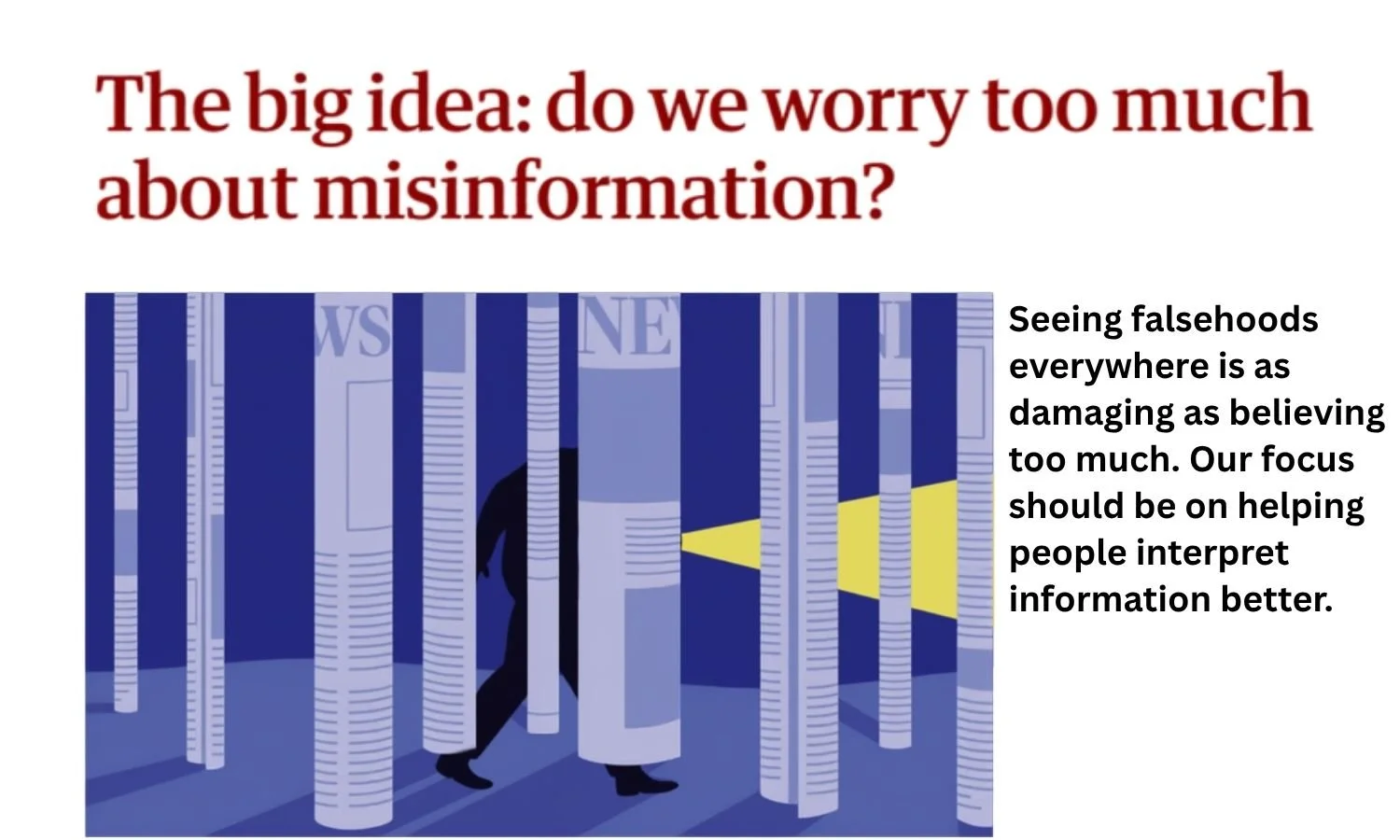
The big idea: do we worry too much about misinformation?
Are we focusing too much on misinformation—and not enough on how people interpret information? In this thought-provoking essay, epidemiologist and misinformation researcher Adam Kucharski argues that while false information is a genuine concern, we also need to avoid becoming overly cynical or dismissive of accurate information, emphasizing that improving people's ability to evaluate evidence is just as important as debunking falsehoods.
-
![]()
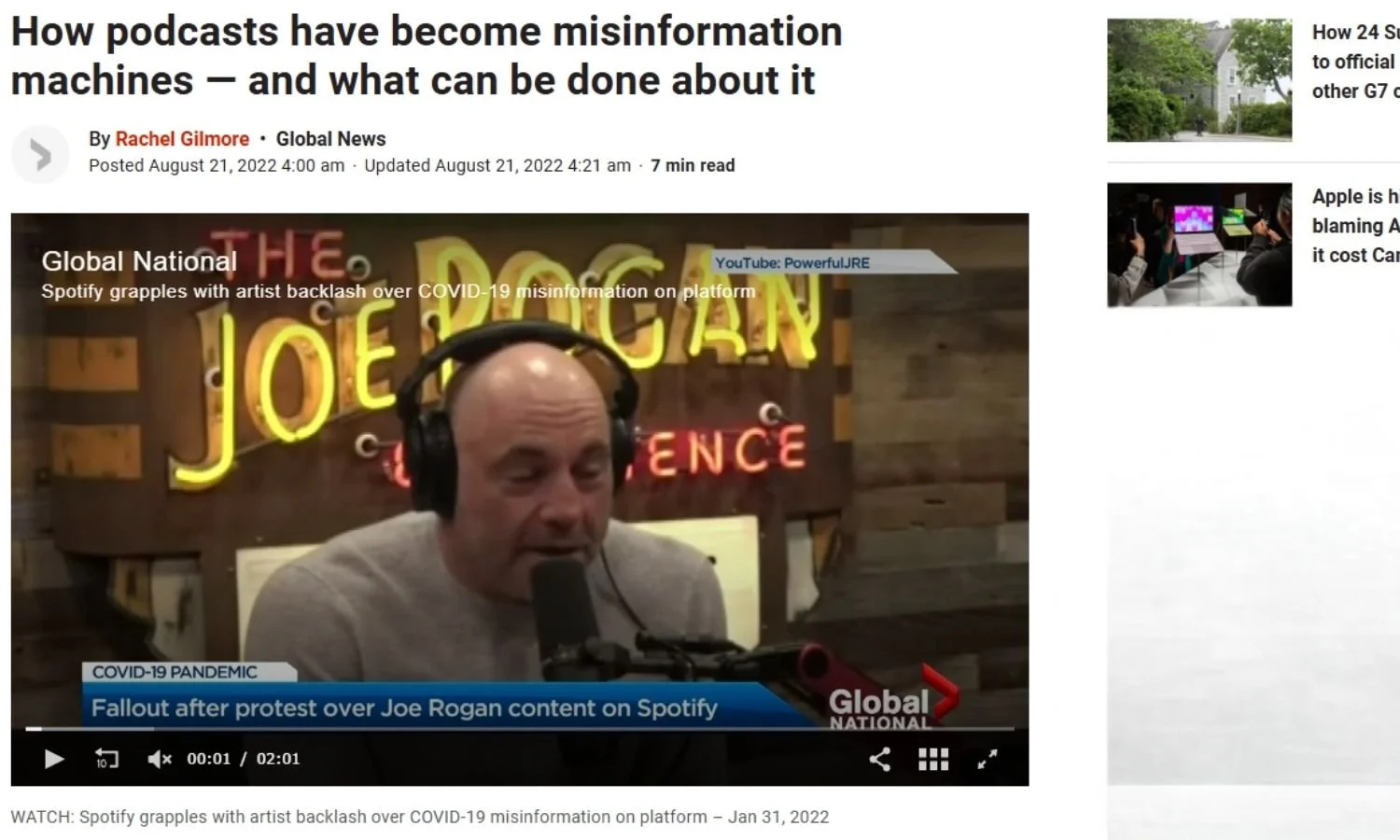
How podcasts have become misinformation machines — and what can be done about it
How have podcasts become a major source of misinformation? This Global News feature explores how long-form podcasts can foster trust in charismatic hosts, spread false claims with little accountability, and reach millions of listeners, underscoring the need for stronger media literacy and critical evaluation of even our most trusted sources.
-
![]()
A ‘Tiny Minority’ of Social Media Accounts Drive Canadian Conspiracy Content
Who is actually driving conspiracy content online in Canada? This The Tyee article highlights new Canadian research showing that while awareness of conspiracy theories is widespread, belief remains relatively uncommon—and that a tiny minority of highly active social media accounts are responsible for producing most conspiracy content and attracting the vast majority of views and engagement.





Books
-
![]()
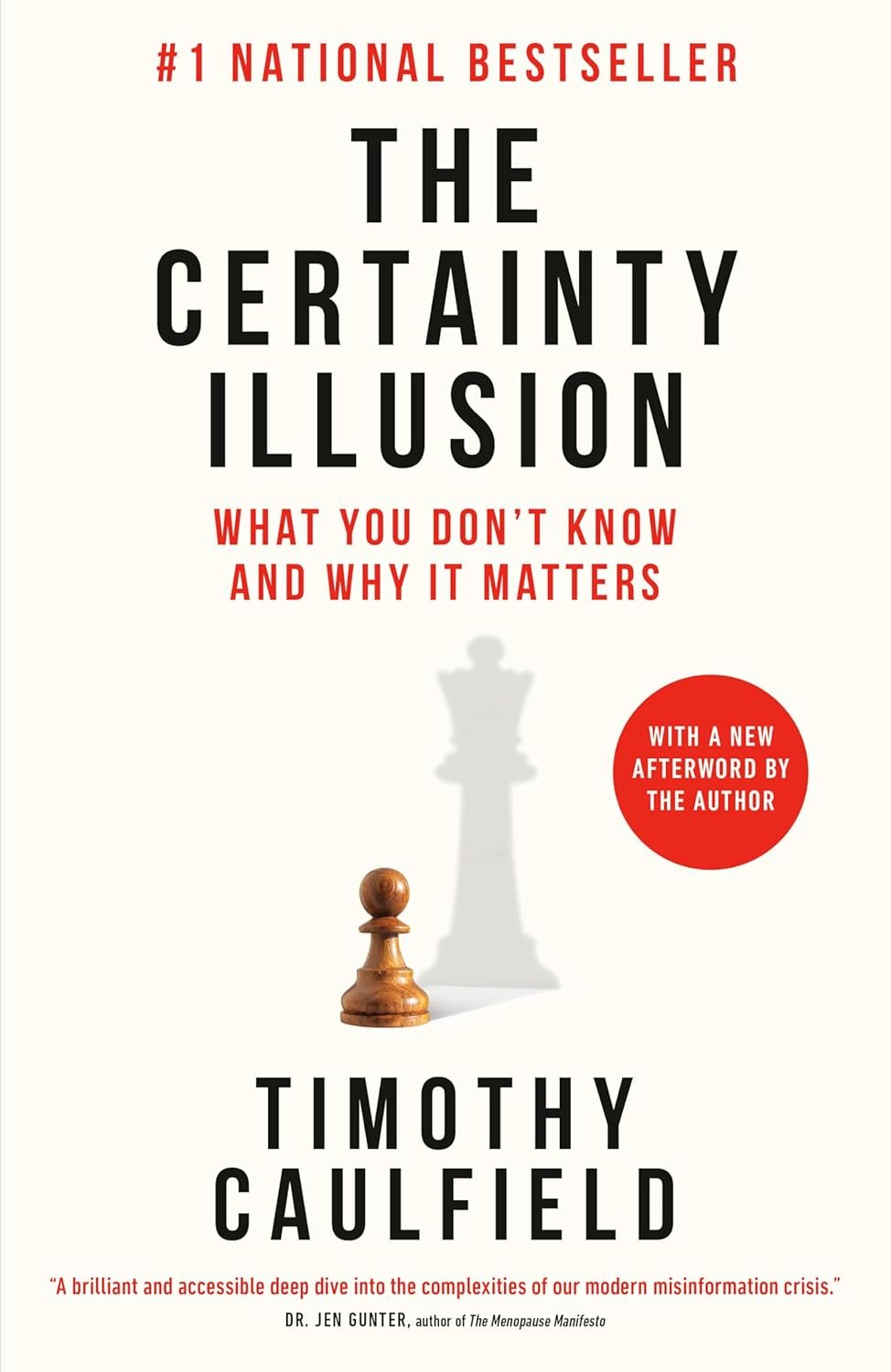
The Certainty Illusion
Knowing the truth, what’s real from what’s fake, should be easy. In today’s world, that’s far from the case. In The Certainty Illusion, Timothy Caulfield lifts the curtain on the forces contributing to our information chaos and unpacks why it’s so difficult—sometimes even for experts—to escape the fake.
-
![]()
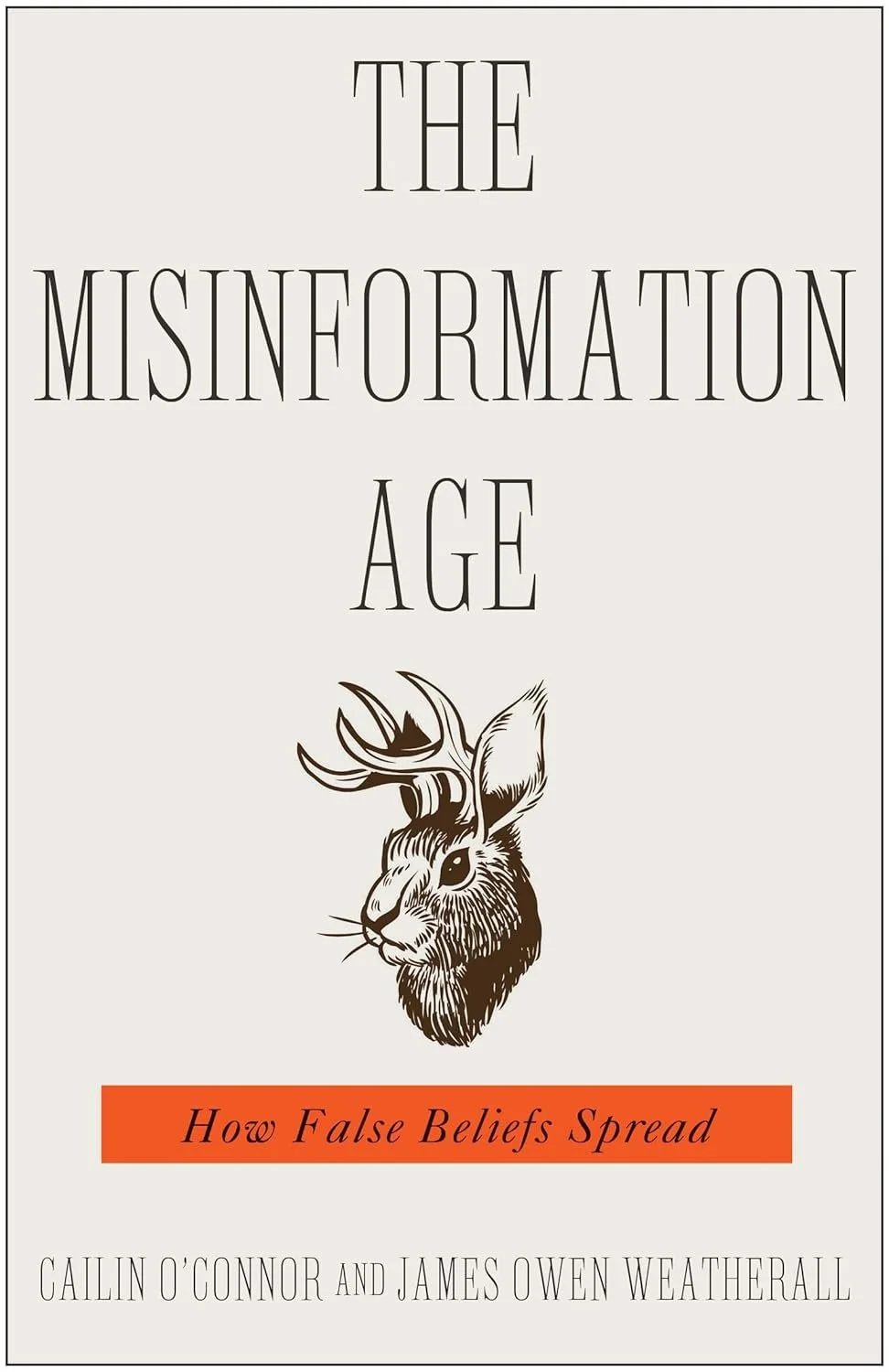
The Misinformation Age
Philosophers of science Cailin O’Connor and James Weatherall argue that social factors, rather than individual psychology, are what’s essential to understanding the spread and persistence of false beliefs. It might seem that there’s an obvious reason that true beliefs matter: false beliefs will hurt you. But if that’s right, then why is it (apparently) irrelevant to many people whether they believe true things or not?
-
![]()
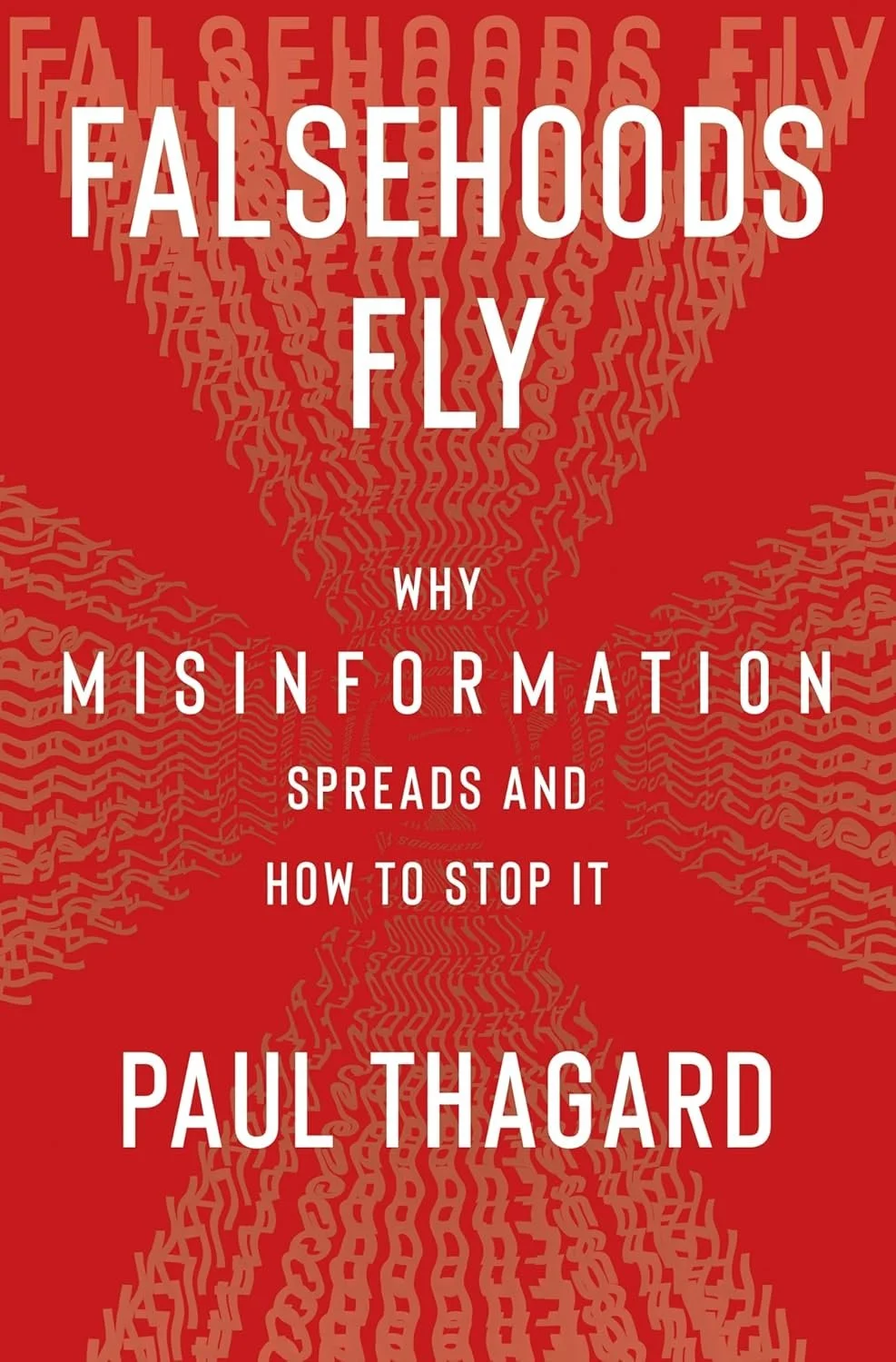
Falsehoods Fly
Misinformation is one of the twenty-first century's greatest challenges, a peril to democracy, peace, science, and public health. Yet we lack a clear understanding of what makes misinformation so potent and why it can spread so rapidly. In Falsehoods Fly, a leading cognitive scientist and philosopher offers a new framework for recognizing and countering misleading claims by exploring the ways that information works--and breaks down.
-
![]()
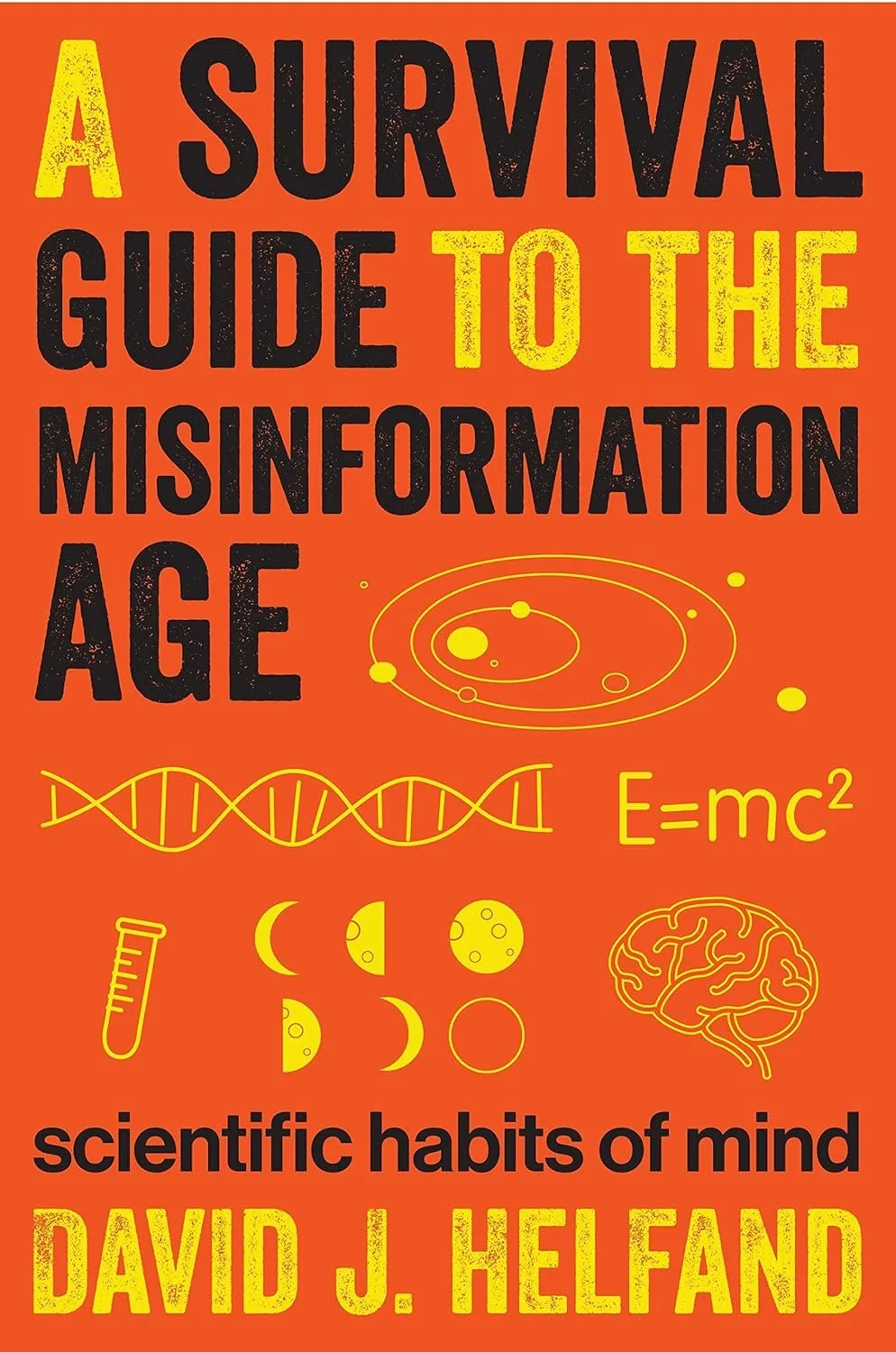
A Survival Guide to the Misinformation Age
We live in the Information Age, with billions of bytes of data just two swipes away. Yet how much of this is mis- or even disinformation? A lot of it is, and your search engine can't tell the difference. As a result, an avalanche of misinformation threatens to overwhelm the discourse we so desperately need to address complex social problems such as climate change, the food and water crises, biodiversity collapse, and emerging threats to public health.
-
![]()
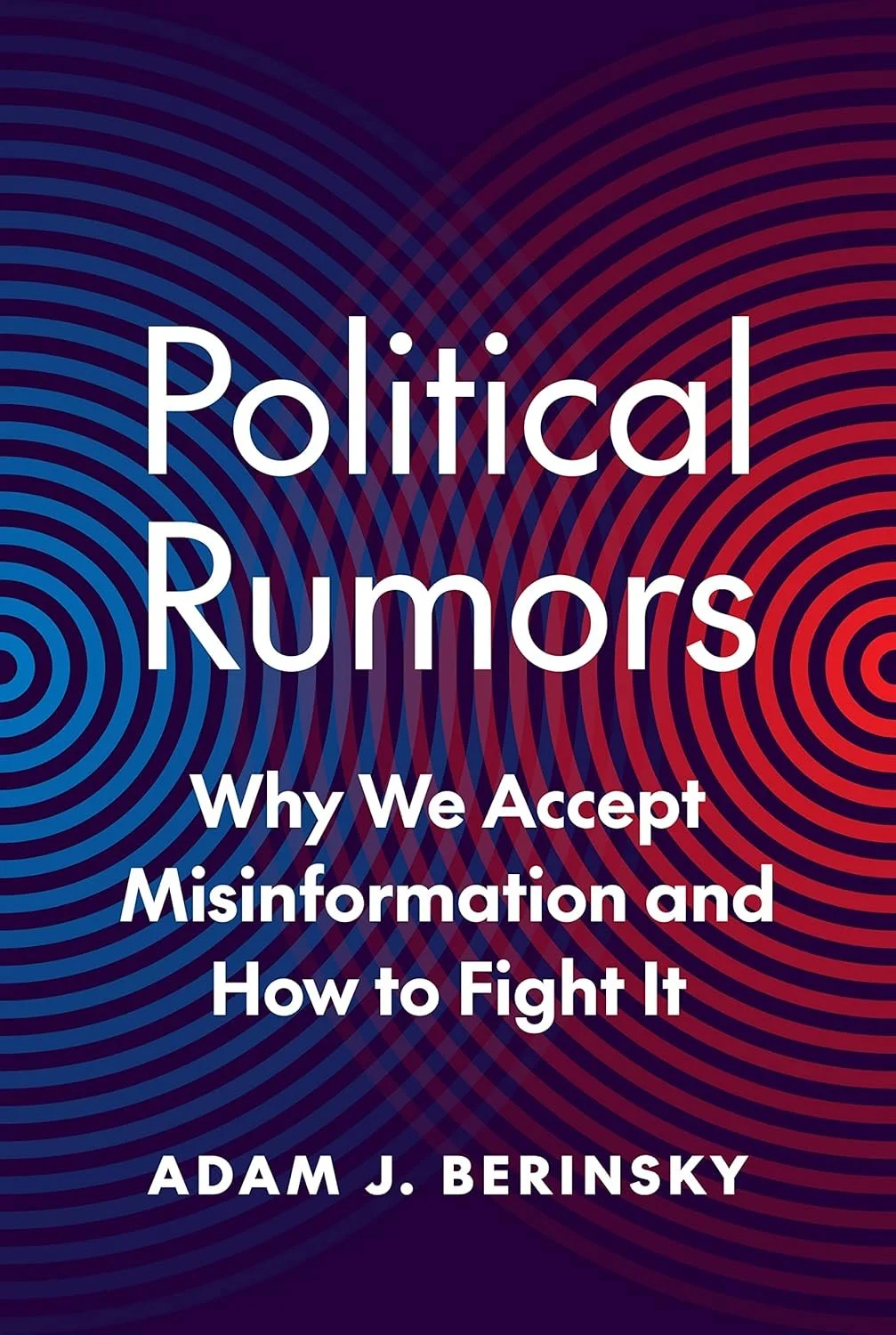
Political Rumors
Drawing on original survey and experimental data, Berinsky shows that a tendency toward conspiratorial thinking and vehement partisan attachment fuel belief in rumors. Yet the reach of rumors is wide, and Berinsky argues that in fighting misinformation, it is as important to target the undecided and the uncertain as it is the true believers.
-
![]()
Wrong
Why are so many of us wrong about so much? From COVID-19 to climate change to the results of elections, millions of Americans believe things that are simply not true—and act based on these misperceptions. In Wrong: How Media, Politics, and Identity Drive Our Appetite for Misinformation, expert in media and politics Dannagal Goldthwaite Young offers a comprehensive model that illustrates how political leaders and media organizations capitalize on our social and cultural identities to separate, enrage, and—ultimately—mobilize us.
-
![]()
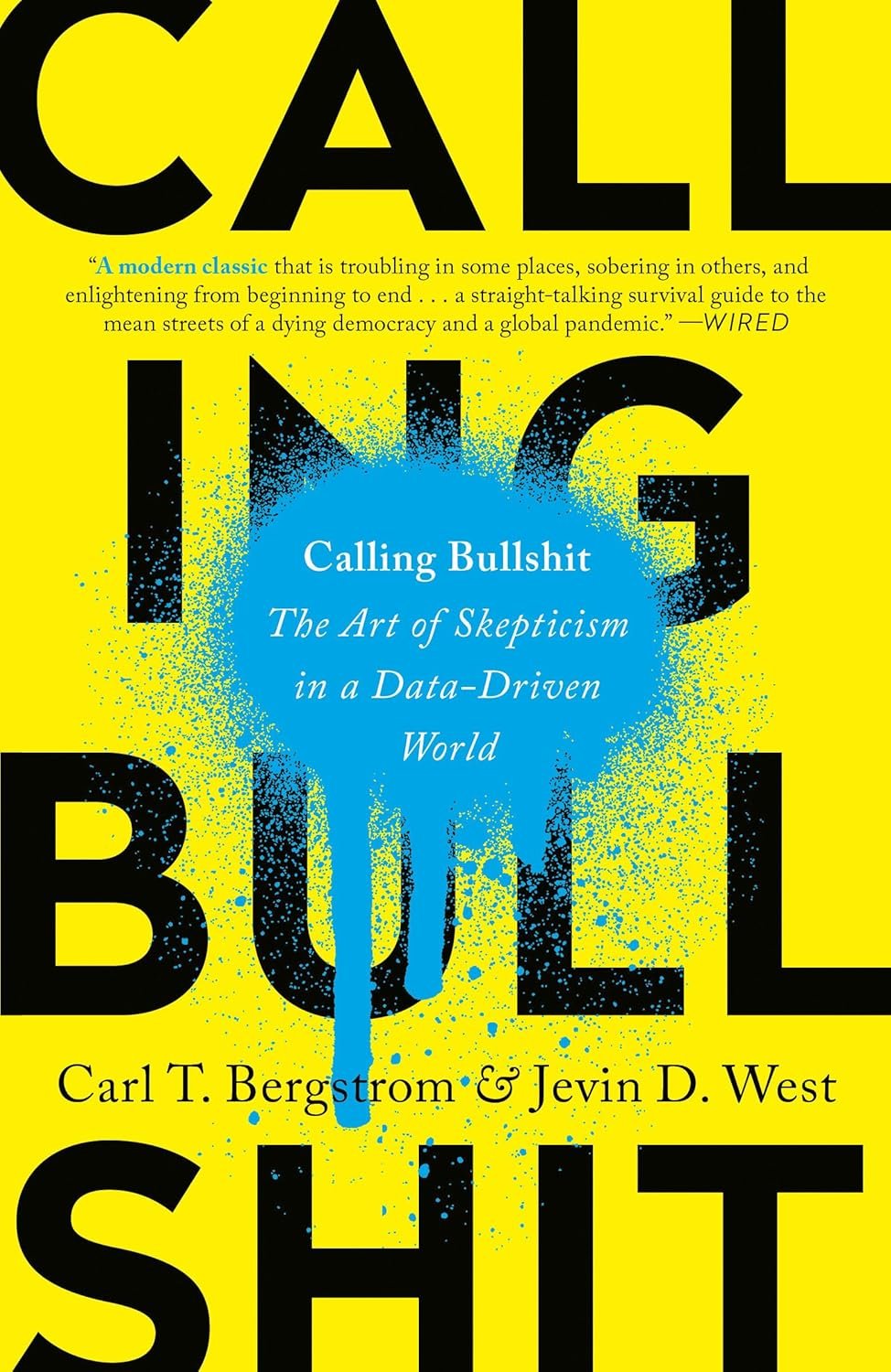
Calling Bullshit
Misinformation, disinformation, and fake news abound and it’s increasingly difficult to know what’s true. Our media environment has become hyperpartisan. In Calling Bullshit, Professors Carl Bergstrom and Jevin West give us a set of powerful tools to cut through the most intimidating data.

Papers
-
![]()
Beyond fake news - Analytic thinking and the detection of false and hyperpartisan news headlines
Does careful thinking make people more politically biased—or better at recognizing the truth? In Beyond “Fake News”, Robert Ross, David Rand, and Gordon Pennycook show that analytical thinking generally helps people distinguish true news from false and hyperpartisan content, challenging the idea that reasoning simply reinforces partisan beliefs.
-
![]()
Fake News: Why do we believe it?
Why do people believe fake news, even when the evidence says otherwise? In this accessible review, Catherine Beauvais explores the psychological, social, and technological factors that make misinformation so persuasive, and explains why understanding our own cognitive biases is essential to resisting it.
-
![]()
Processing of misinformation as motivational and cognitive biases
Why do intelligent people continue to believe misinformation, even after it's been corrected? In Processing of Misinformation as Motivational and Cognitive Biases, Yan Zhou and Lijiang Shen explain how our motivations, emotions, and cognitive biases shape the way we evaluate information, making false beliefs surprisingly resistant to correction.
-
![]()
The spreading of misinformation online
Why do conspiracy theories and misinformation spread so effectively online? In this influential study, Michela Del Vicario and colleagues show that social media users cluster into like-minded "echo chambers," where shared beliefs and polarization—not necessarily the quality of the evidence—drive the rapid spread of misinformation.
-
![]()
The echo chamber effect on social media
Why do online spaces so often feel divided into separate realities? In this review, Cinelli and colleagues examine how echo chambers form across social media platforms, showing how platform design, user behaviour, and selective exposure can reinforce polarization and make misinformation harder to challenge.
-
![]()
Lazy, not biased: Susceptibility to partisan fake news is better explained by lack of reasoning than by motivated reasoning
Why do some people believe fake news while others recognize it as false? In Lazy, Not Biased, Gordon Pennycook and David Rand show that susceptibility to misinformation is driven less by political bias than by a failure to engage in careful, analytical thinking—suggesting that critical reasoning is one of our strongest defenses against misinformation.
-
![]()
The backfire effect after correcting misinformation is strongly associated with reliability
Why do people share misinformation, even when they know it might not be true? In this review, Lisa Fazio examines the cognitive processes that make misinformation so persuasive—including familiarity, repetition, and failures in memory updating—and explains why correcting false beliefs is far more difficult than simply presenting the facts.
-
![]()
The effects of repetition frequency on the illusory truth effect
Why do repeated false claims become so convincing? In The Effects of Repetition Frequency on the Illusory Truth Effect, Aumyo Hassan and Sarah Barber demonstrate that each repetition makes misinformation seem more believable, with the biggest increase in perceived truth occurring after just one repeat—helping explain why repeated myths, slogans, and false claims can be so persuasive.
-
![]()
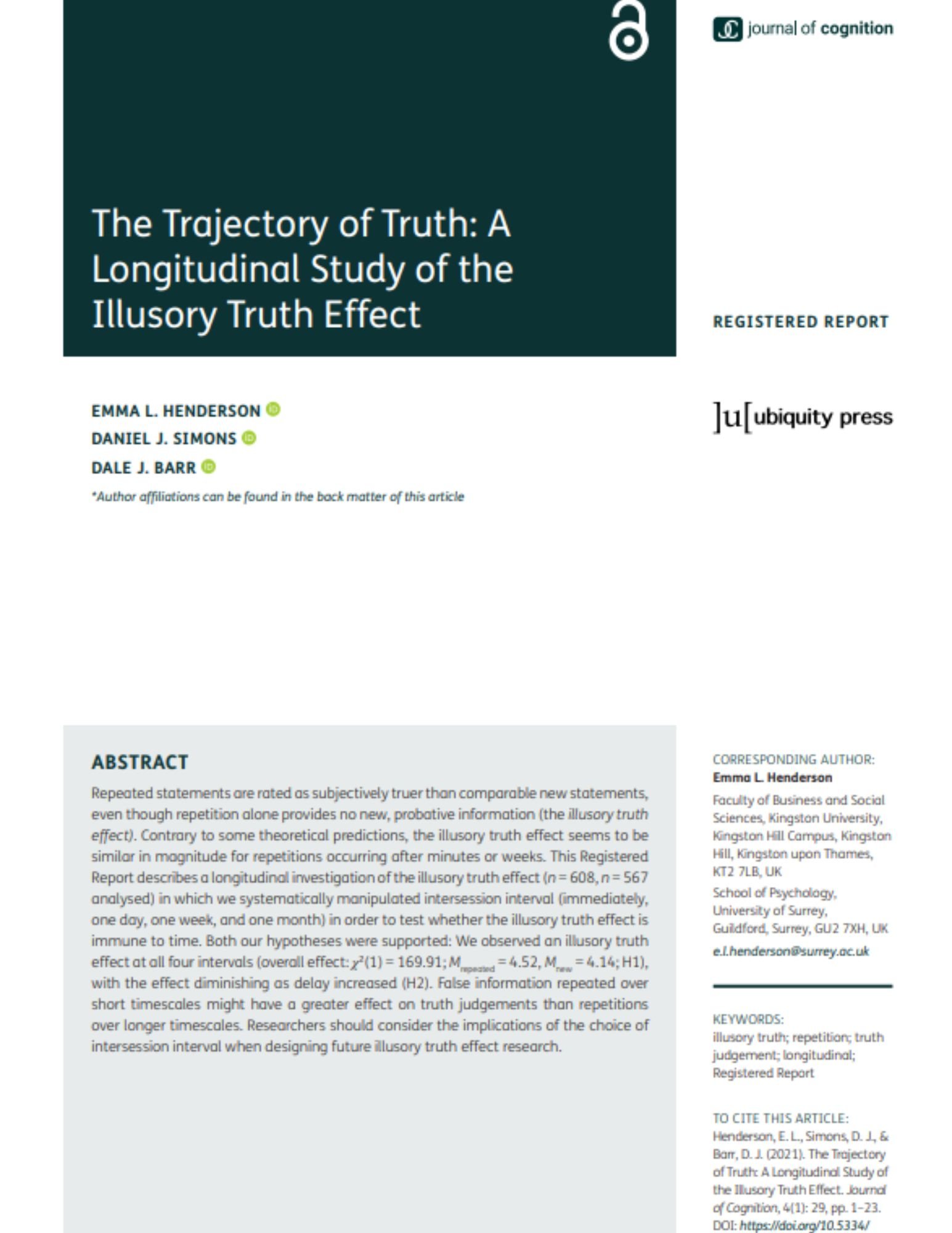
The Trajectory of Truth - A Longitudinal Study of the Illusory Truth Effect - Image
Why does the influence of repeated misinformation persist for so long? In this longitudinal study, Emma Henderson and colleagues found that repeated statements are judged as more truthful whether they are repeated minutes, days, or even a month later, demonstrating the enduring power of the illusory truth effect and the lasting impact of repeated misinformation.
-
![]()
From fallacies to semi-fake news: Improving the identification of misinformation triggers across digital media
How does language shape what we believe to be true? In this study, the authors explore how misinformation is constructed through discourse, showing that the way claims are framed, repeated, and communicated can make false narratives appear credible and persuasive—even when they lack supporting evidence.
-
![]()
Misconceptions, Misinformation, and the Logic of Identity-Protective Cognition
Why do facts often fail to change people's minds? In Misconceptions, Misinformation, and the Logic of Identity-Protective Cognition, Dan Kahan argues that people are more likely to accept or reject information based on whether it aligns with their cultural or political identity than on the evidence itself, highlighting why correcting misinformation requires more than simply presenting the facts.
-
![]()
The Role of Emotions and Identity-Protection Cognition When Processing (Mis)Information
What role do emotions play in whether we believe misinformation? In this study, Magdalena Wischnewski and Nicole Krämer found that emotional responses—particularly feelings such as anxiety, anger, and enthusiasm—often have a greater influence on how people interpret politicized information than political identity itself, highlighting the powerful role emotions play in shaping belief and susceptibility to misinformation.
-
![]()
Conspiracy Theories: Evolved Functions and Psychological Mechanisms
Why are conspiracy theories so widespread, and why do they seem so compelling? In this influential review, Jan-Willem van Prooijen and Mark van Vugt argue that the human mind evolved to detect genuine threats from hostile groups, making us naturally inclined to see hidden plots and conspiracies—even when no evidence exists to support them.
-
![]()
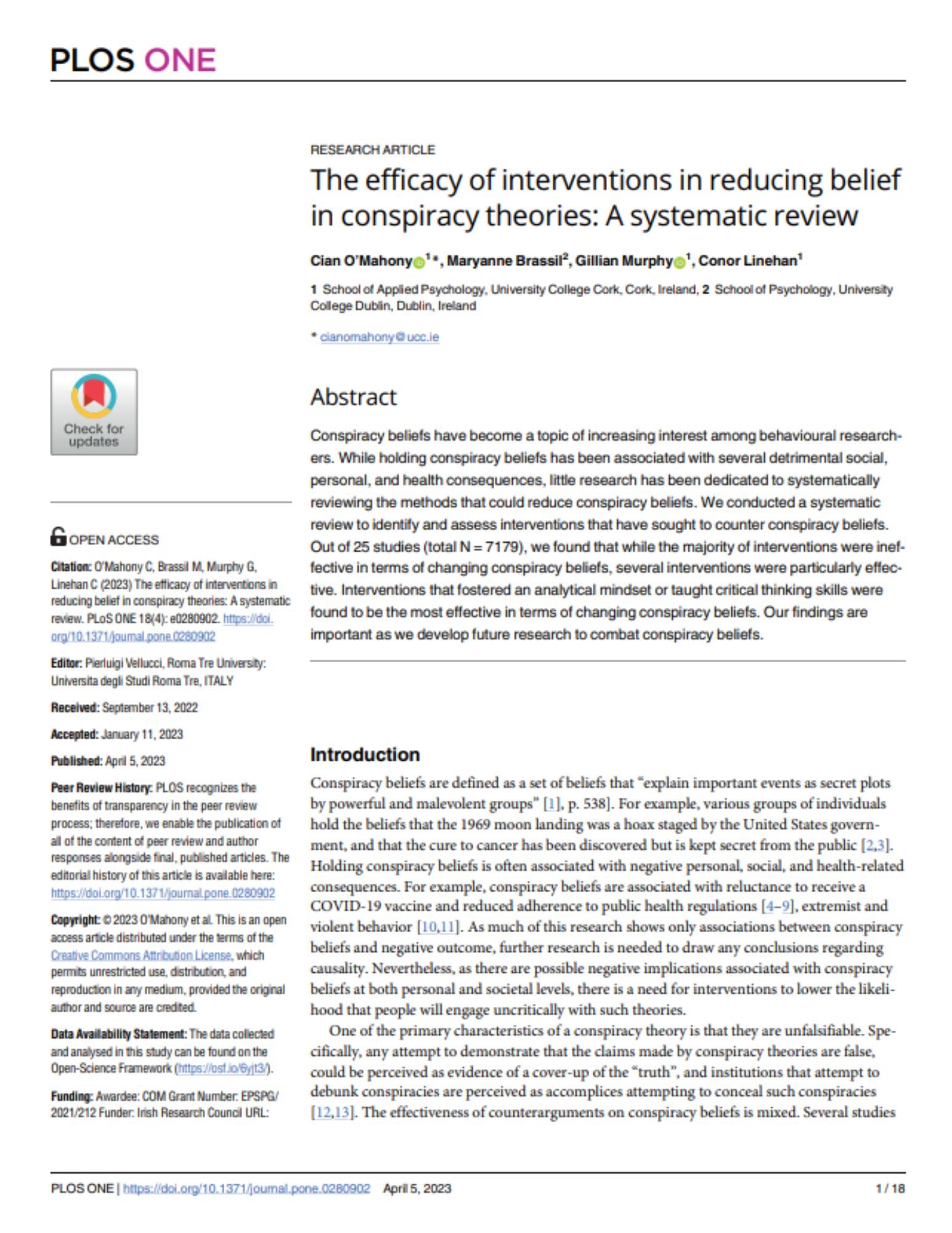
The efficacy of interventions in reducing belief in conspiracy theories: A systematic review
How can we effectively reduce belief in conspiracy theories and misinformation? In this systematic review of 25 studies, Cian O'Mahony and colleagues found that while many interventions have little effect, approaches that promote analytical thinking, critical thinking skills, and psychological inoculation consistently show the greatest promise for reducing conspiracy beliefs.
-
![]()
Psychological inoculation improves resilience against misinformation on social media
How can we build resistance to misinformation before people encounter it? In this large-scale field experiment, Jon Roozenbeek and colleagues found that short, engaging “prebunking” videos that expose common manipulation techniques significantly improve people's ability to recognize misinformation, demonstrating that psychological inoculation can strengthen resilience at scale.